Tag: Everything Old is New Again

This series is inspired by antique imagery, reinvented in fabric.

Nana (after anonymous Flemish master)

Nana (after anonymous Flemish master)

I am very excited to complete the first two works of my new series, Family Portraits.  This series lies at the intersection of heritage and family history, art history and digital technology, craft and fine art, grief, memory, mental illness, addiction, and love.

I am 3/4 Belgian-American, and I am lucky to have visited Belgium several times.  This series involves combing through boxes of family photographs and researching the art of the Flemish masters.  A digital collage is printed onto cotton fabric, layered with lace, batting, and backing and stitched by and/or machine.  Each portrait is an homage, an exploration of family dynamics and grief.  All is done without the use of AI.

When I look at this work, I cannot believe the painter is unknown, let alone the dressmakers.  That dress is gloriously ridiculous.  It must have taken teams of lacemakers and dressmakers months to complete.  The dress itself is a masterpiece, and the painter painstakingly recreated each strand of lace with the stroke of a brush.

Countess Ursula’s stunning gown inspired me to create an homage to my Nana, Rosella Van Belle, my mother’s stepmother.  Nana was the Martha Stewart of here day.  She cultivated a lovely rose garden, was a great cook, dressmaker, and hosted a magical Christmas Eve celebration throughout my childhood.  It was always a highlight of my year.
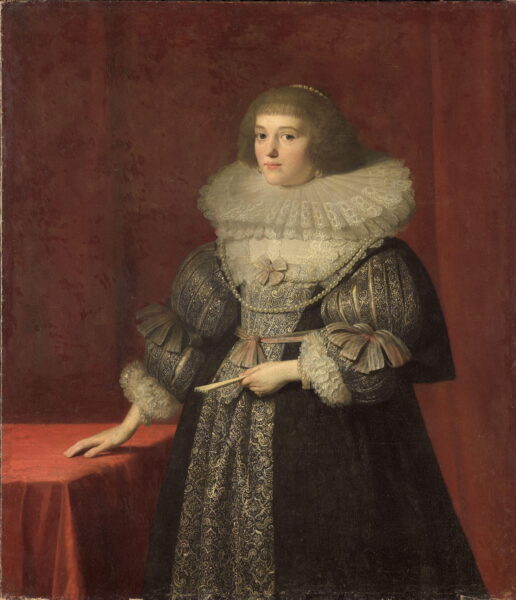
Portrait of Ursula, Countess of Solms-Braunfels, Anonymous circa 1630.  

Countess Ursula’s stunning gown inspired me to create an homage to my Nana, Rosella Van Belle, my mother’s stepmother.  Nana was the Martha Stewart of her day.  She cultivated a lovely rose garden, was a great cook, dressmaker and needle worker.   She hosted a magical Christmas Eve celebration throughout my childhood.  It was always a highlight of my year.
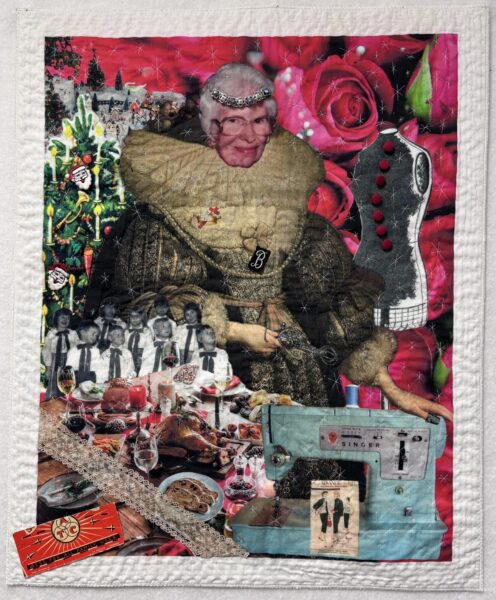
collage of family photos into painting by anonymous Flemish master
Nana, (After Anonymous), by Mary Vaneecke 2026

The digital collage includes a picture of her grandchildren singing Christmas carols, her Singer sewing machine, a fantastic bit of handmade lace, and buttons, patches, and the cover of a needle packet from her sewing box.  There is some of her best-loved cookies on the table, along with a Christmas stollen.  She is crowned with one of her bracelets.
See the first work in the series here.

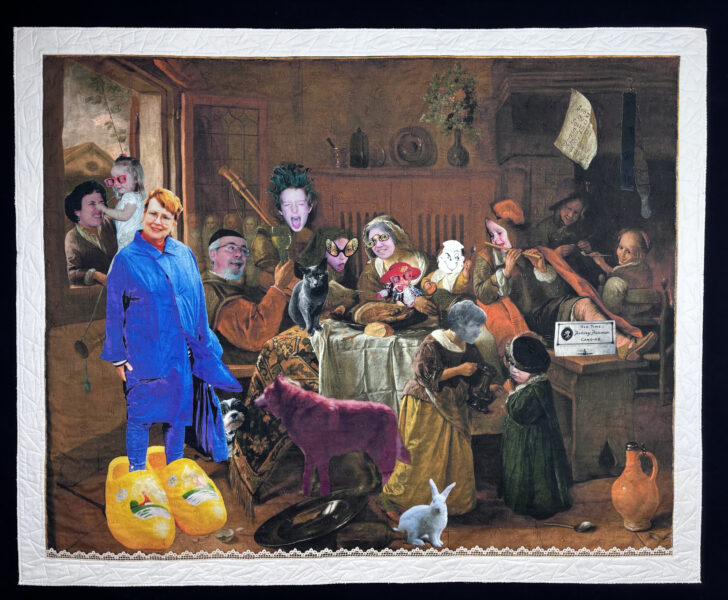
Family Portrait (after Jan Steen)

Family Portrait (after Jan Steen)

And now for something completely different….

I am very excited to complete the first two works of my new series, Family Portraits.  This series lies at the intersection of heritage and family history, art history and digital technology, craft and fine art, grief, memory, mental illness, addiction, and love.

I am 3/4 Belgian-American, and I am lucky to have visited Belgium several times.  This series involves combing through boxes of family photographs and researching the art of the Flemish masters.  A digital collage is printed onto cotton fabric, layered with lace, batting, and backing and stitched by and/or machine.  Each portrait is an homage, an exploration of family dynamics and grief.  All is done without the use of AI.  

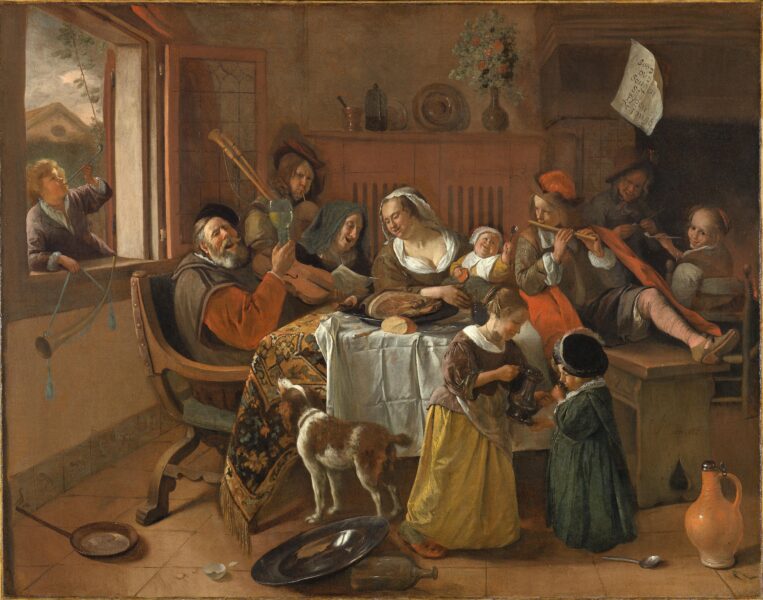
The first work is based on Jan Steen’s famous Merry Family.  There is a lot going on in this painting!  You can learn all about it here at the Rijksmuseum.

The Merry Family by Jan Steen, 1668


Family Portrait (after Jan Steen) by Mary Vaneecke, 2026

I feel this is a rich vein for exploration, and I love finding the perfect elements to combine in a collage.  What do you think?

Inspiration:  What I did on my Summer Vacation, Part 1

Inspiration: What I did on my Summer Vacation, Part 1

I spent a week in Washington D.C. this summer and the highlight of the trip was two visits to the National Museum of African American History and Culture, aka the Blacksonian (according to VSB).  I wasn’t sure I could get in, because tickets are sold out months in advance.  A guard suggested I get in line at noon and wait till one o’clock when all the unclaimed will call tickets are released for the day.  It means you have only half a day to see the museum with that ticket (unless you wait in line another day, like I did), and you are not guaranteed tickets, but it is well worth the chance to get look at this amazing museum. Every American needs to see it.

More than half of the Blacksonian is below ground, so it is much larger than it looks from the mall. The lower floors focus on the history of slavery/emancipation/Jim Crow/segregation and the Civil Rights era.  The upper floors are displays of African American contributions to the arts and athletic achievements.

It was thought that the average visit would be about 3 hours, but it is more than 6 because there is so much history, and so many meaningful displays to see. And this is history we don’t read about in school.  It is difficult to just walk briskly by a pair child-sized shackles. A looming guard tower from Angola prison.  A chapel for the casket of Emmett Till.  At least half the exhibits and displayed items just stop you dead in your tracks.

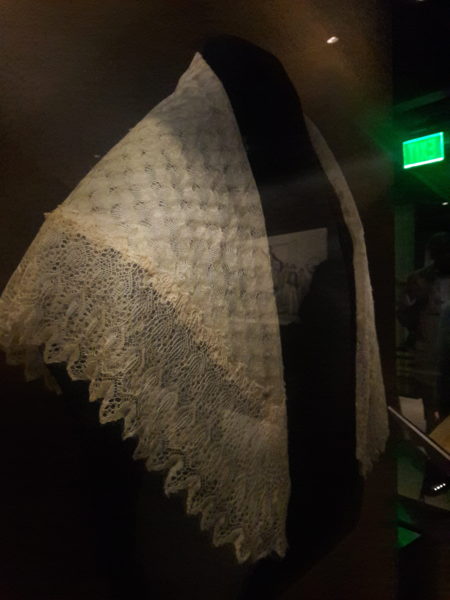
I am going to post just a few pics of textile-related items.  The first is this gorgeous piece, a silk and linen shawl given to Harriet Tubman by Queen Victoria.  Think about that.  A woman born a slave in the USA could not only capture the attention of the Queen of England, but receive such an exquisite gift from her.

Shawl given to Harriet Tubman by Queen Victoria.

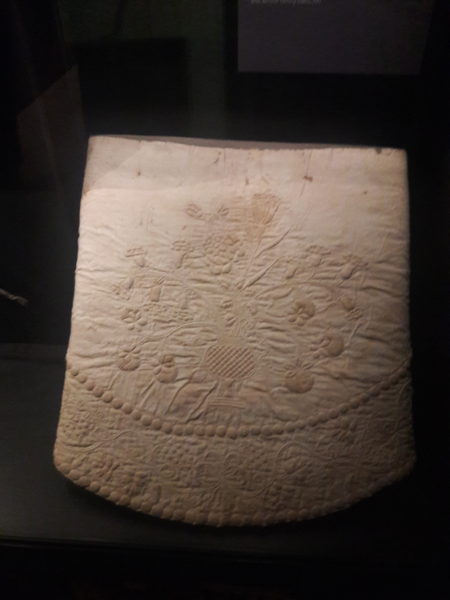
And this piece, a beautiful whitework dresser scarf.  I believe it is one of the few pieces documented to have been created by a slave.  Quilt historians had thought most of the fine quilting was done by plantation mistresses (neither would have signed their work).  We are discovering now that is not always the case.

Wholecloth quilted work by slave.
Wholecloth quilted work by an unknown slave woman.

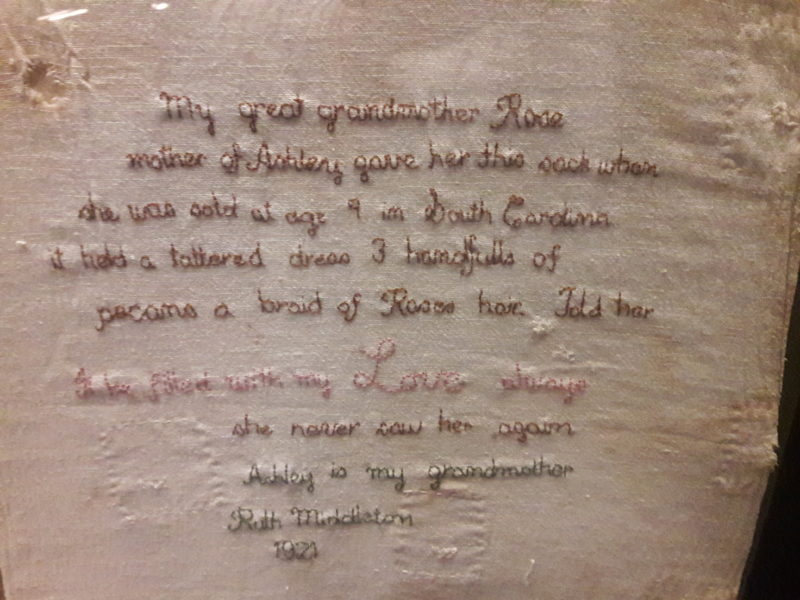
But this last piece took my breath away.  It is called Ashley’s Sack.  It was given by Rose, a slave on the Middleton Place Plantation in Charleston, to her nine year old daughter Ashley on the occasion of Ashley being sold away.  Rose filled the sack with a few handfuls of pecans, a lock of her hair, and ‘her love always.’  The two never saw each other again. In 1921, Rose’s great granddaughter Ruth Middleton embroidered their story onto the sack.

Asley's sack, detail.
Ashley’s sack, detail.

This family kept this sack for generations.  Like the museum itself, it is a treasure.

Frozen in Time I

Frozen in Time I

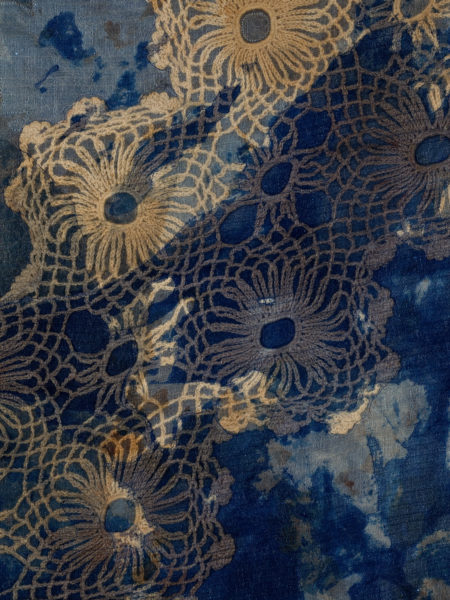
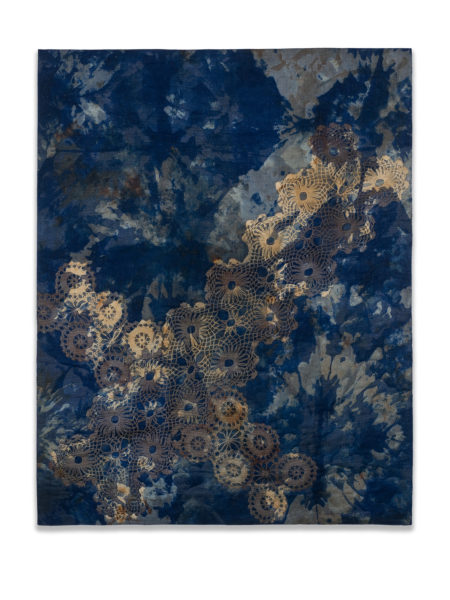
Frozen in Time I, with detail.  (Photo by Jack Kulawik).  This new art quilt combines new hand-dyed silk fabrics with vintage handworked crochet (makers unknown).  Rust dyed, layered and stitched on eco-felt.

This piece continues a new series utilizing under-appreciated handwork of unknown makers.

Frozen in Time I by Mary Vaneecke. 43.5'' x 34.5'' 2016.
Frozen in Time I  by Mary Vaneecke. 43.5” x 34.5” 2016.


Frozen in Time I by Mary Vaneecke detail
Frozen in Time I, detail. By Mary Vaneecke


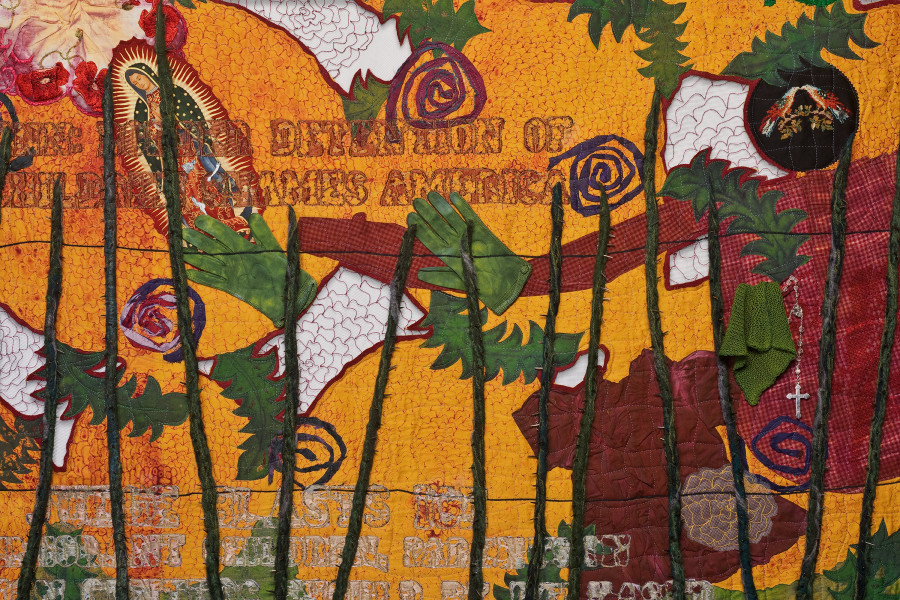
Abuela Reads the Headlines

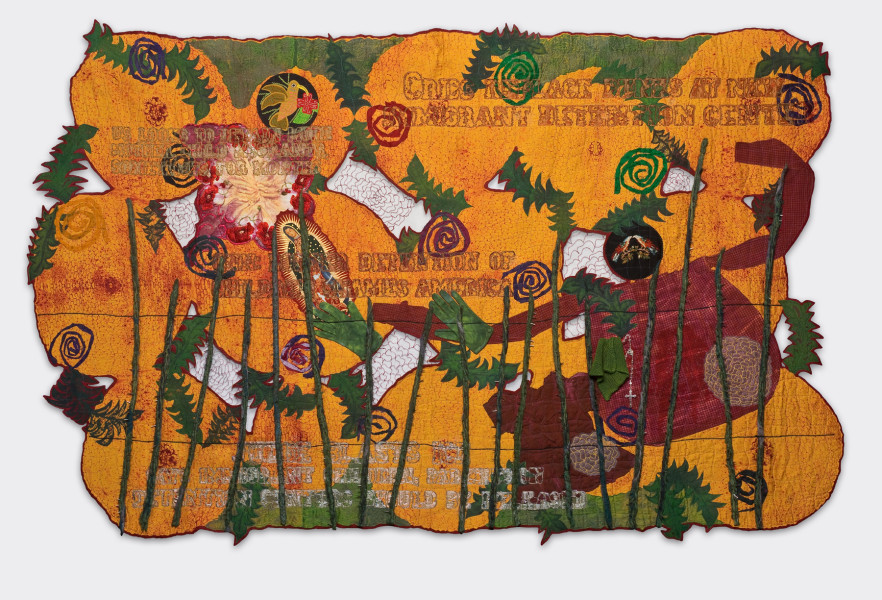
Abuela Reads the Headlines , 2015

Abuela is Spanish for grandmother.  I imagine her in her barrio (neighborhood) garden in my hometown, Tucson, surrounded by an ocotillo (a living, cactus-type) fence.  She has her handwork and the blessed Virgin of Guadalupe nearby, with a grandchild at her knee.  Abuela scans the headlines about America’s current immigration policy, and weeps.

Materials:  vintage handworked textiles (makers unknown), felted wool, embellishing (480 jewelry spikes), cotton and cotton-silk fabric, dyeing, discharging, silk sari ‘yarn,’ window screen, acrylic felt, embellishments (milagros and crystal rosary), synthetic organza.

Techniques:  dyeing, heat and chemical burning, wet felting, hand stitching, couching, machine stitch, discharging, devore, dyeing, cutting.

Abuela Reads the Headlines, 55''h x 84''
Abuela Reads the Headlines, 55”h x 84”
Abuela Reads the Headlines, detai
Abuela Reads the Headlines, detail

My Mother is a Fish

My Mother is a Fish24” x 24”  The title of this piece comes from the William Faulkner novel, As I Lay Dying. A 14th Century Mongolian platter inspired the work.  It is a wholecloth quilt, meaning the top layer is a single piece of fabric.  The design comes entirely from dark blue thread on white fabric.  My Mother is a Fish has been exhibited widely and was published in an article in the October-November issue of Quilting Arts Magazine.

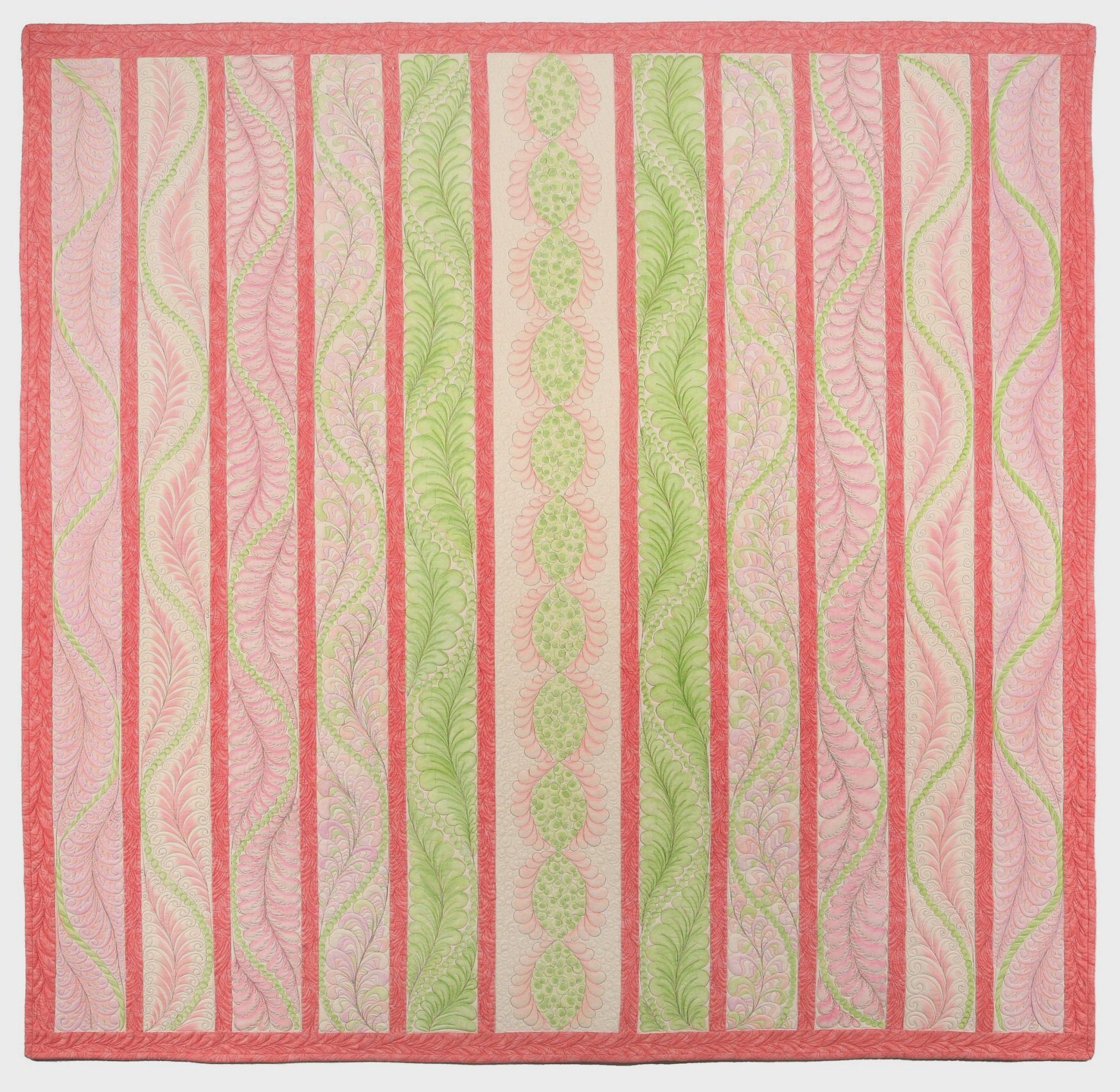
Homage

Homage
Inspired by Susan McCord’s 1880s applique masterpiece, the Vine Quilt, the original has 3000 pieced leaves running up and down 13 rows.  I wanted to create an homage to the original, recreating it with contemporary techniques.  I quilted pairs of fanciful feather variations and then colored each one with pencil.  A fixative was then painted onto the fabric.  This piece was a winner of the 2010 Handiquilter Longarm Quilting Award in Paducah, KY.


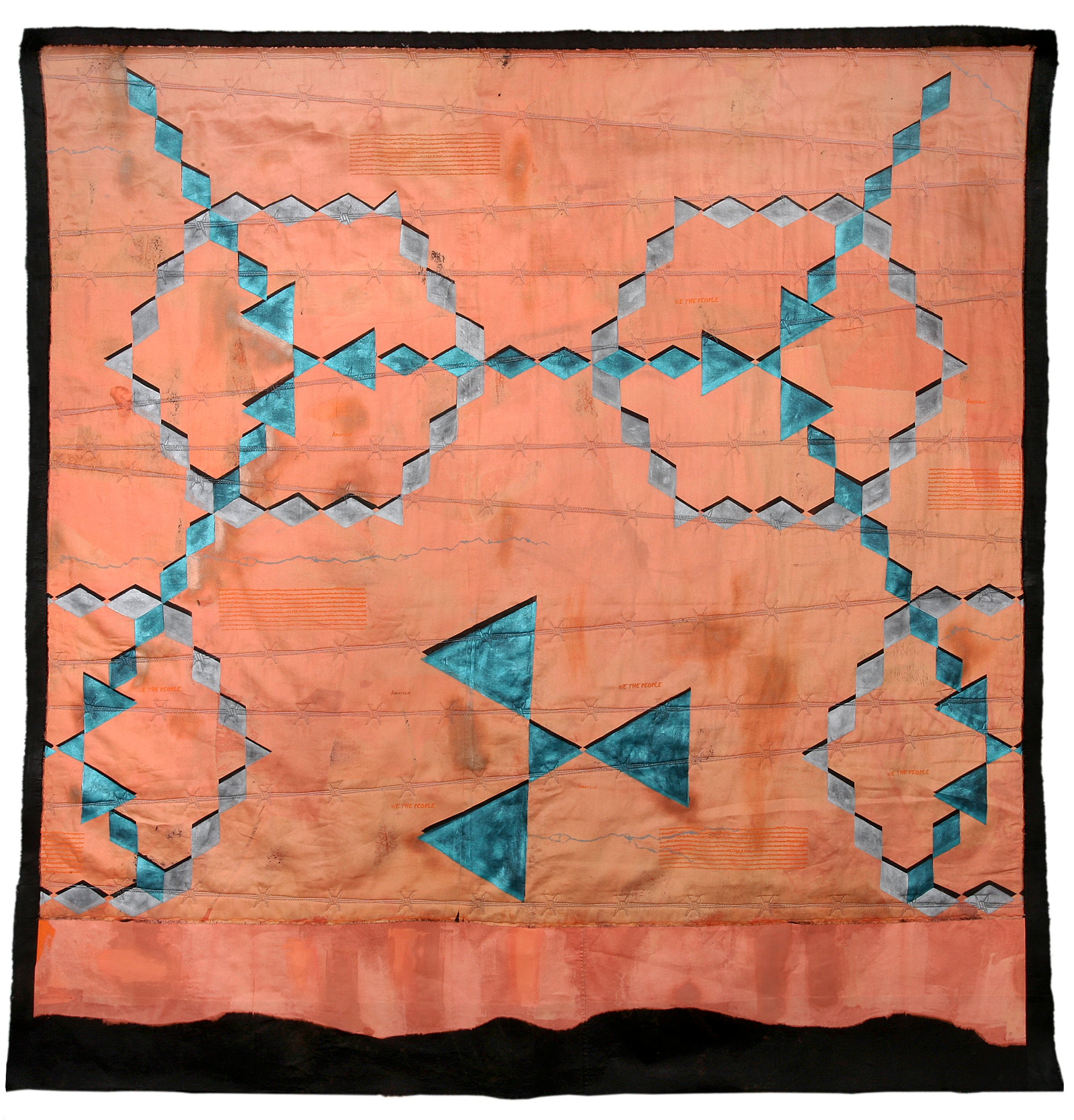
America Surrounded

America Surrounded70” x 65”  This piece is my re-interpretation of the traditional Revolutionary War-era quilt block, Burgoyne Surrounded.  I updated it by replacing the traditional square grid with a triangular grid and using paint, printing, and discharging techniques instead of traditional piecing.  Made from cotton fabrics, discharged, painted and screen printed, layered with felt and machine stitched.